
Quick answer
Planetary transits describe where planets are moving now and how those movements relate to your natal chart. They provide current-context timing, while Dasha describes longer natal period chapters. Transits are most meaningful when read against the birth chart, not as generic sky news alone.
Key takeaways
- Transits compare the current sky with natal placements and houses.
- Without a natal chart, transit talk becomes generic.
- Slow planets often frame longer themes; fast planets frame shorter windows.
- Dasha and transits answer different timing questions.
- One transit does not affect everyone the same way.
- Responsible transit language stays measured and avoids absolute predictions.
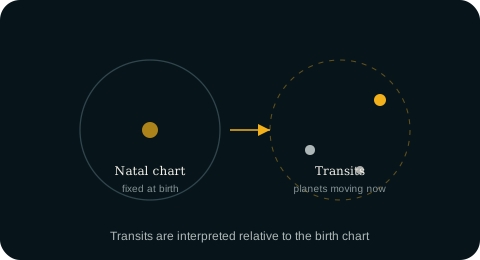
If the birth chart is the natal map, transits are the weather moving across it. In Vedic astrology, practitioners watch current planetary positions and compare them with natal planets, houses and sensitive points.
What planetary transits are
A transit occurs when a moving planet forms a meaningful relationship to a natal placement or house. Traditional interpretation considers the nature of the planets involved, the houses activated and the broader chart condition. Node-related movement is covered further in Rahu and Ketu.
Natal chart relationship
Without a natal chart, transit discussions become generic. The same Saturn or Jupiter movement can land on very different life areas for different people depending on natal structure, Moon Sign and house rulerships. House context is summarized in twelve houses.
Major vs fast-moving planets
Slower planets such as Saturn, Jupiter, Rahu and Ketu are often used for longer developmental themes. Faster bodies such as the Moon, Mercury or Venus change more quickly and are typically used for shorter windows. The Moon’s daily motion is especially relevant for short-term lunar context.
How transits differ from Dasha
Dasha describes an unfolding sequence of planetary periods rooted in natal lunar data. Transits describe current sky motion against the natal map. Many astrologers consider both: Dasha for chapter themes, transits for present activation. Compare them directly in Dasha vs transits.
Why full-chart context matters
A transit to one planet can look dramatic in isolation and modest in a balanced reading. Supportive and challenging factors elsewhere in the chart may modify expectations. Responsible transit interpretation stays measured and avoids absolute predictions.
It also helps to distinguish event-seeking from theme-tracking. Many useful transit readings describe pressures, openings, delays or focus areas rather than promising a single outcome. That approach aligns with Moon Sign’s preference for clear, non-sensational language.
Transits, Moon Sign and everyday context
Because the Moon moves quickly, short-term lunar transits are often discussed for mood and daily texture, while slower planets frame longer chapters. Personal relevance still depends on how those movements contact the natal map, including the natal Moon Sign and house structure.
Common misconceptions
- A transit is not the same as a Dasha period.
- One viral transit headline does not apply equally to every chart.
- Transits alone are not a complete forecast system.
- Fast lunar movement is not automatically more important than slow planetary themes.
Note: This website explains transit concepts. It does not compute live planetary positions or personal transit reports.
Frequently asked questions
What is a planetary transit?
It is current planetary movement interpreted relative to natal placements, houses or sensitive points.
Do I need my birth chart for transits?
Yes for personal relevance. Without a natal map, transit discussion stays generic.
How do transits differ from Dasha?
Dasha is a natal period sequence; transits are current-sky activation. See Dasha vs transits.
Which planets matter most in transit?
It depends on the question. Slow planets often frame longer themes; faster planets mark shorter windows.
Do Rahu and Ketu have transits?
Yes. Node movement is part of transit analysis. Learn more in Rahu and Ketu.
Can this website show my current transits?
No. These pages are educational only.